Central Maryland Transportation Alliance communicates about transportation policy, advocacy priorities, public investment, research, news, and the ways transportation affects access to jobs and opportunities. The organization needed a digital presence capable of presenting that range of information without making the site feel dense or difficult to navigate.
The nonprofit website redesign needed to balance several functions at once: explain CMTA’s mission, make transportation issues understandable to a general audience, provide access to advocacy and educational content, highlight the organization’s transportation report card, support donations, and accommodate frequently changing news and policy information. The site also needed enough flexibility to support future content without losing its visual structure.
The goal was to create a stronger, more contemporary WordPress website that made CMTA’s work easier to understand and gave visitors clear paths into its advocacy, research, news, and organizational information.
The website also needed to make a complex policy subject feel immediate and relevant. Rather than presenting transportation solely through reports and institutional language, the design needed to connect the issue to people, communities, mobility, and access to opportunity while giving CMTA a practical platform it could continue using as its communications needs evolved.
The primary audience included Maryland residents, transportation advocates, policymakers, community partners, donors, journalists, civic organizations, and others interested in transportation policy and regional mobility.
Visitors could arrive with very different objectives. Some might be looking for a specific report or policy position, while others might be learning about CMTA for the first time, following a transportation issue in the news, reviewing the report card, or considering supporting the organization. The content structure therefore needed to accommodate both quick information retrieval and deeper exploration.
The nonprofit website redesign was developed around a structured WordPress system rather than a collection of individually designed pages. Work included designing and developing the homepage and reusable internal layouts, organizing major content areas, and creating dedicated structures for transportation initiatives, organizational information, advocacy, news, and public education.
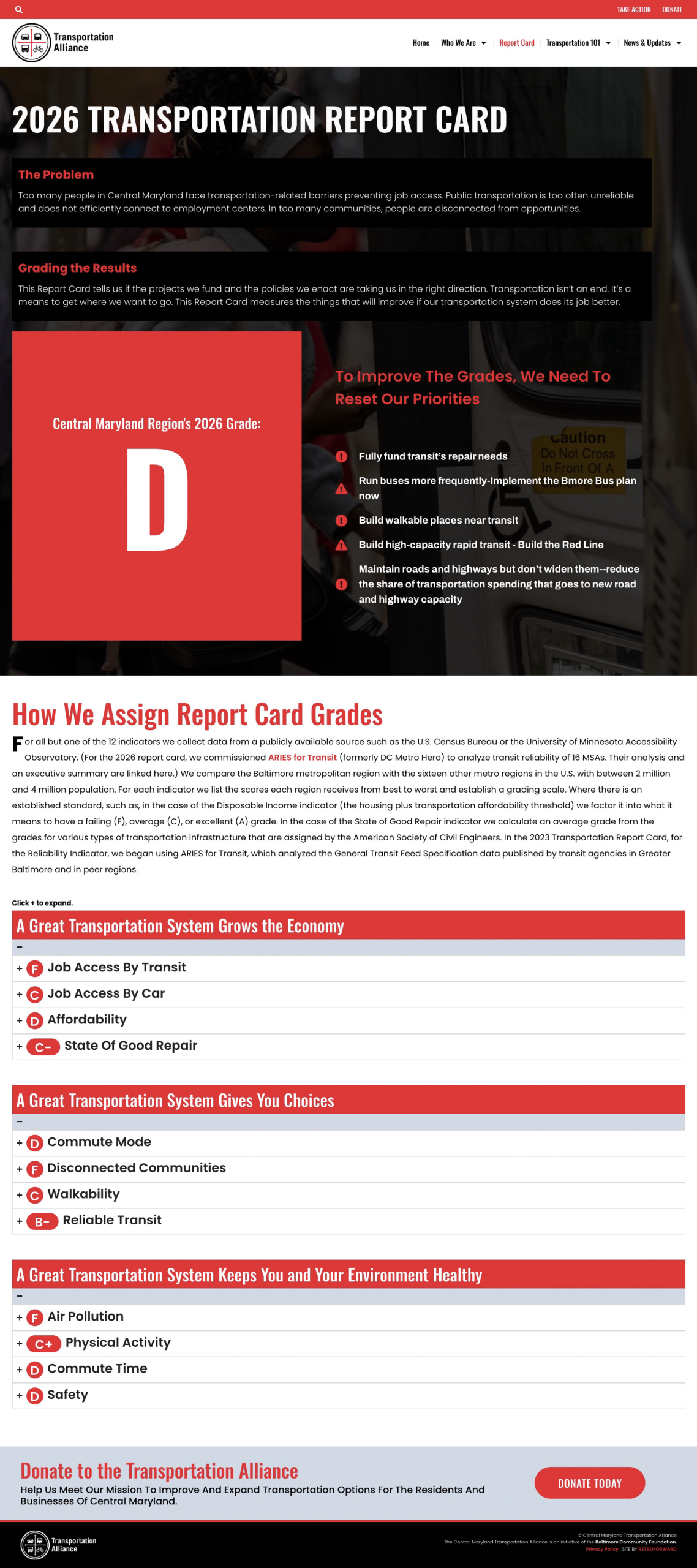
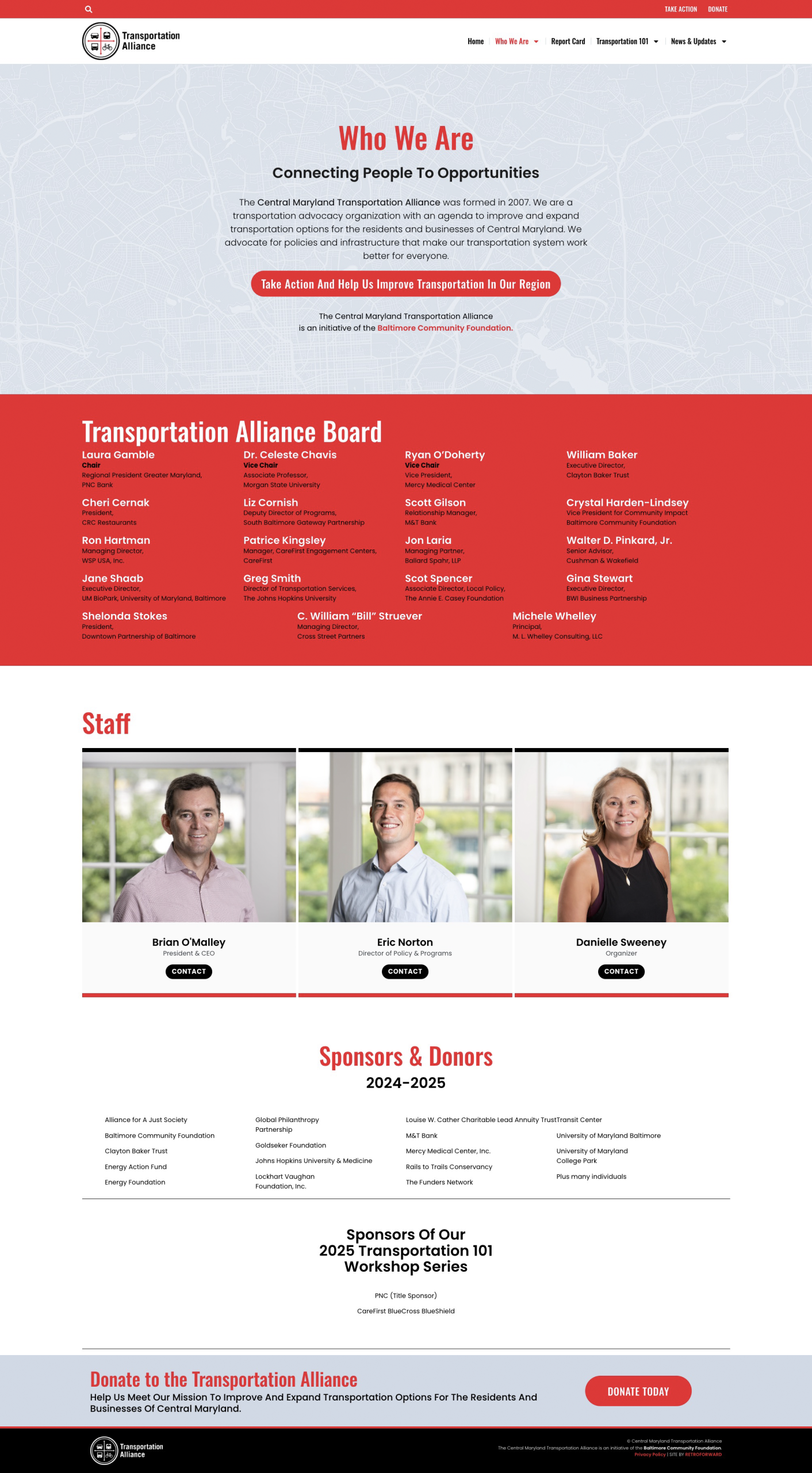
Special attention was given to the transportation report card, calls to action, board and staff information, donation opportunities, and frequently updated content. Reusable page patterns and a consistent visual hierarchy helped different types of information feel connected while allowing individual sections to serve their own communication goals.
Design and development were handled together, allowing visual decisions to account for how CMTA would actually manage and expand the site after launch.
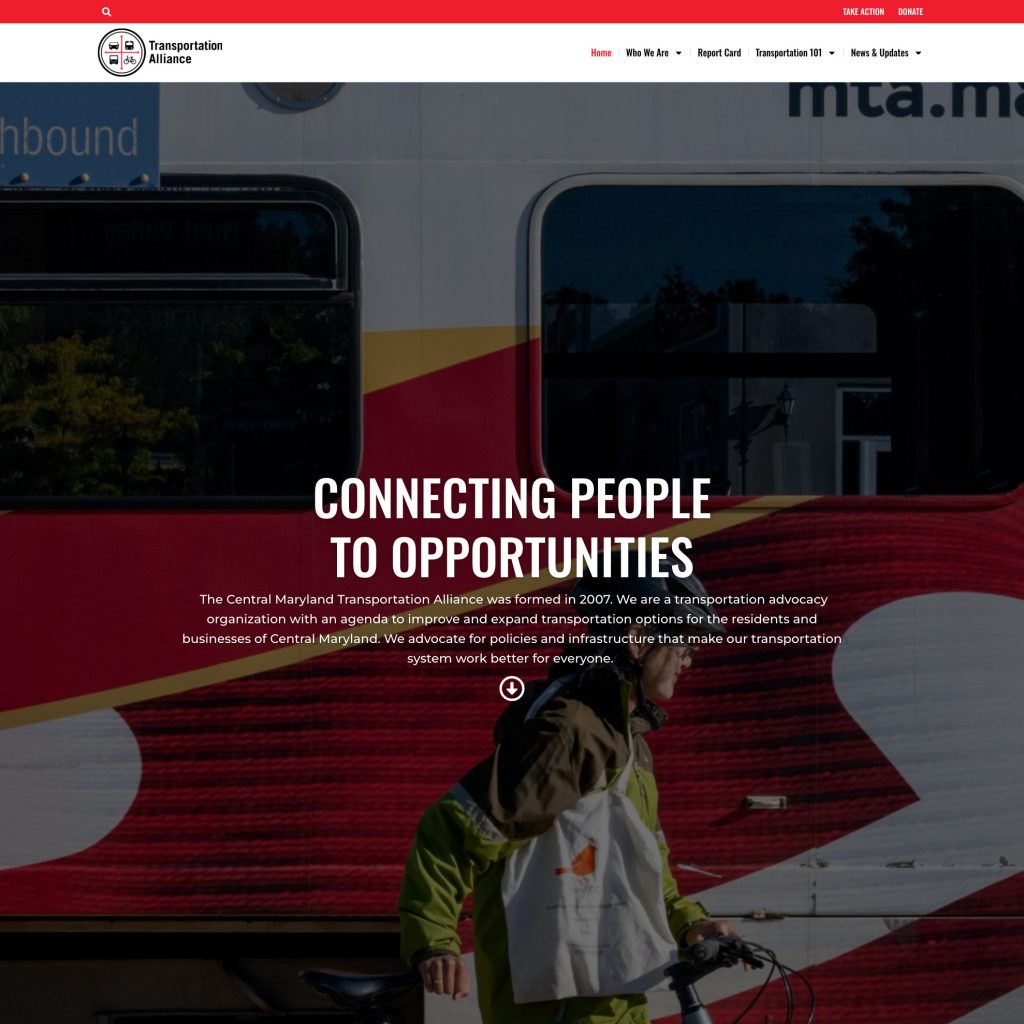
CMTA’s established red, black, and white identity provided the foundation for a bold visual system. Large typography and strong transportation and Baltimore-region photography gave the site energy and helped make policy-oriented content feel more immediate.
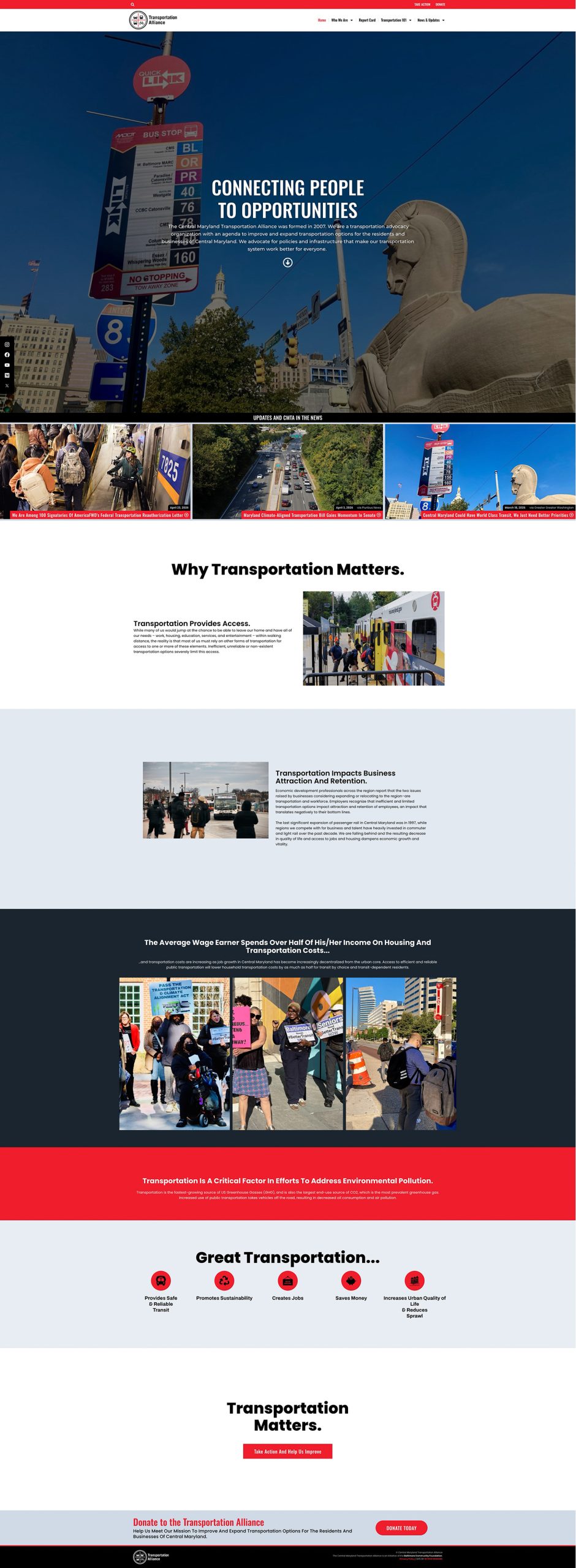
The homepage used large-scale imagery and concise messaging to establish CMTA’s central idea of connecting people to opportunities, while subsequent content was organized into clearly defined sections with prominent headlines, calls to action, and visual entry points.
The design balanced urgency with accessibility. Red was used strategically for emphasis and action rather than overwhelming the interface, while white space, strong contrast, and consistent typography helped longer policy and advocacy content remain readable.
The completed nonprofit website redesign gave CMTA a more cohesive platform for bringing together advocacy, transportation research, organizational information, news, public education, and opportunities for engagement.
The new WordPress structure created a consistent visual framework while supporting very different kinds of content, from transportation report cards and policy information to staff profiles and current news. The result was a site that presented CMTA’s mission with greater visual impact while making its information easier for visitors to navigate, understand, and act on.