The pandemic made reliable internet access, appropriate devices, and basic digital skills essential for education, employment, health information, government services, and everyday communication. At the same time, many Baltimore residents and organizations continued to face significant barriers to participating fully in an increasingly digital environment.
The Baltimore Digital Equity Coalition needed a way to communicate those disparities beyond policy discussions and research reports. The digital equity awareness campaign had to translate statistics into messages that were immediately understandable, visually engaging, and easy for coalition members and community partners to share.
The campaign also needed to represent digital equity as a broader community issue rather than simply an internet-access problem, connecting affordability, devices, skills, access, and opportunity.
The goal was to increase awareness of Baltimore’s digital divide and provide coalition members, advocates, and community organizations with practical communications tools they could use to support the conversation around digital equity.
The campaign needed to turn data into clear public-facing messages while establishing a recognizable visual system across downloadable advocacy signs, social graphics, animated statistics, and video content. The materials were also designed to encourage broader participation through the #DigitalEquityBaltimore campaign identity.
The campaign addressed Baltimore residents, community organizations, small businesses, nonprofit partners, advocates, public officials, funders, and others involved in addressing barriers to digital access.
Because the subject affected people in different ways, the communications needed to make statistical information understandable without assuming technical or policy expertise. Individual pieces focused on specific aspects of digital inequity so audiences could quickly understand both the scale of the problem and the people affected by it.
As chair of the Baltimore Digital Equity Coalition Communications Committee, the work combined campaign planning with hands-on design and production. Research and statistics were reviewed for information that could be translated into concise, visual messages suitable for social media, video, and downloadable advocacy materials.
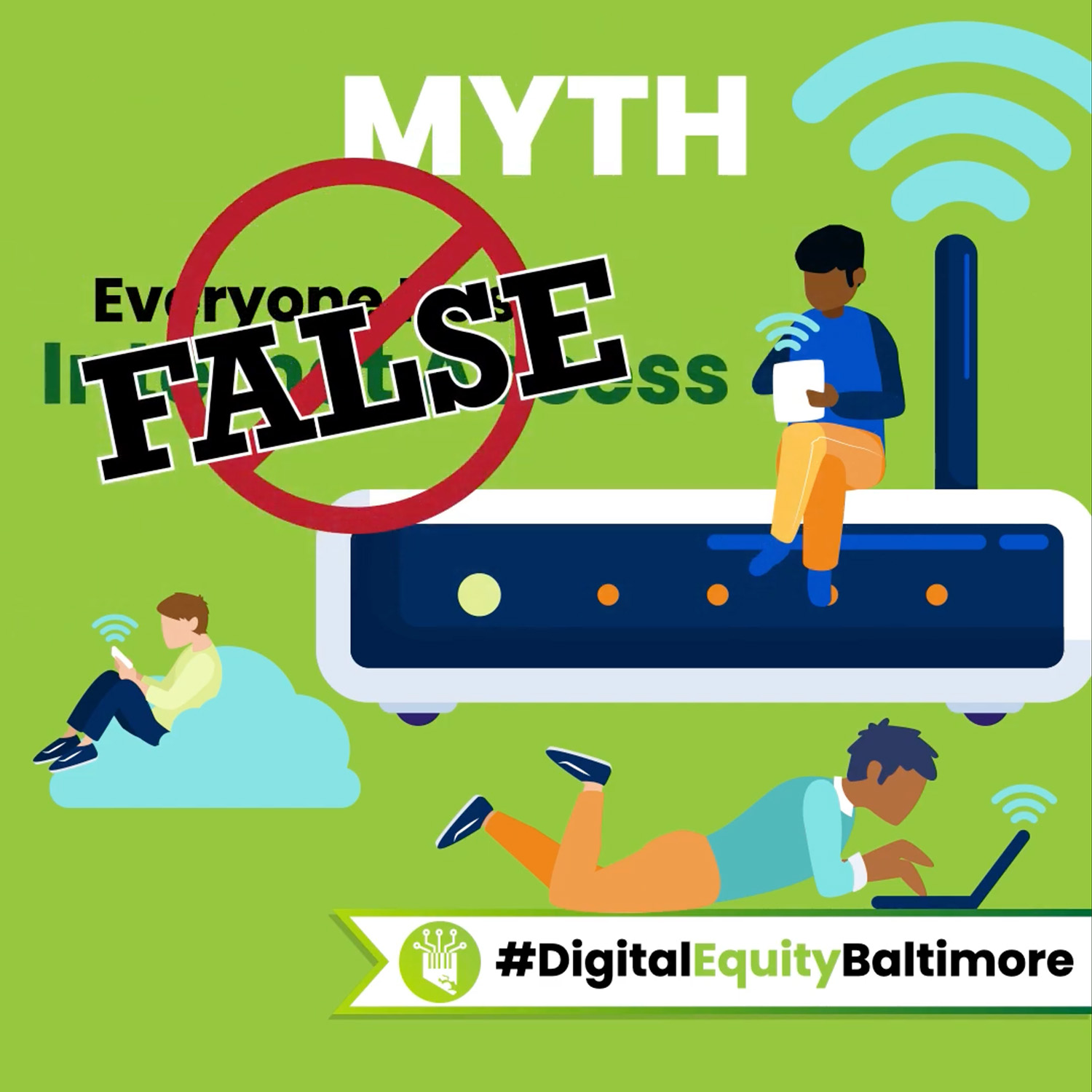
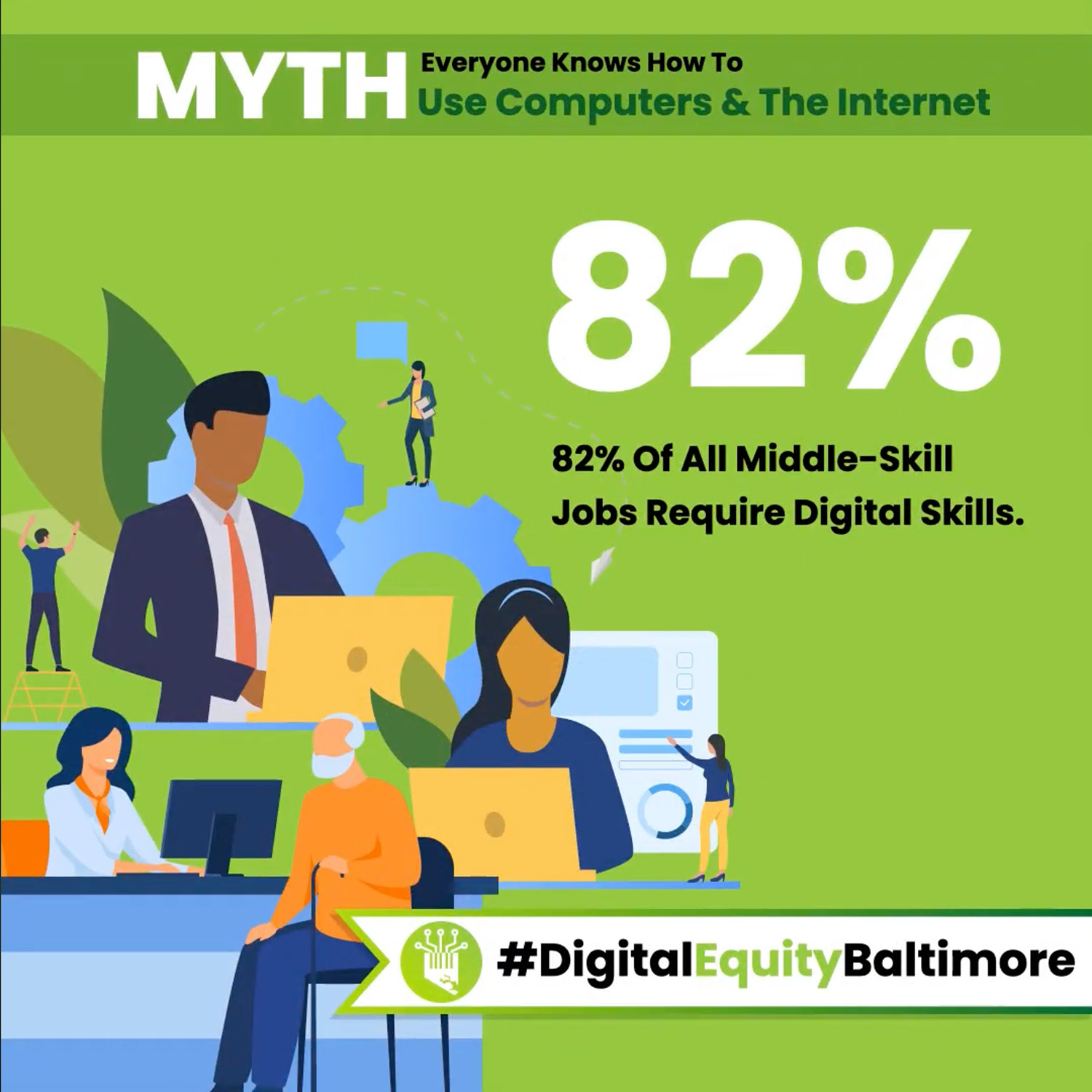
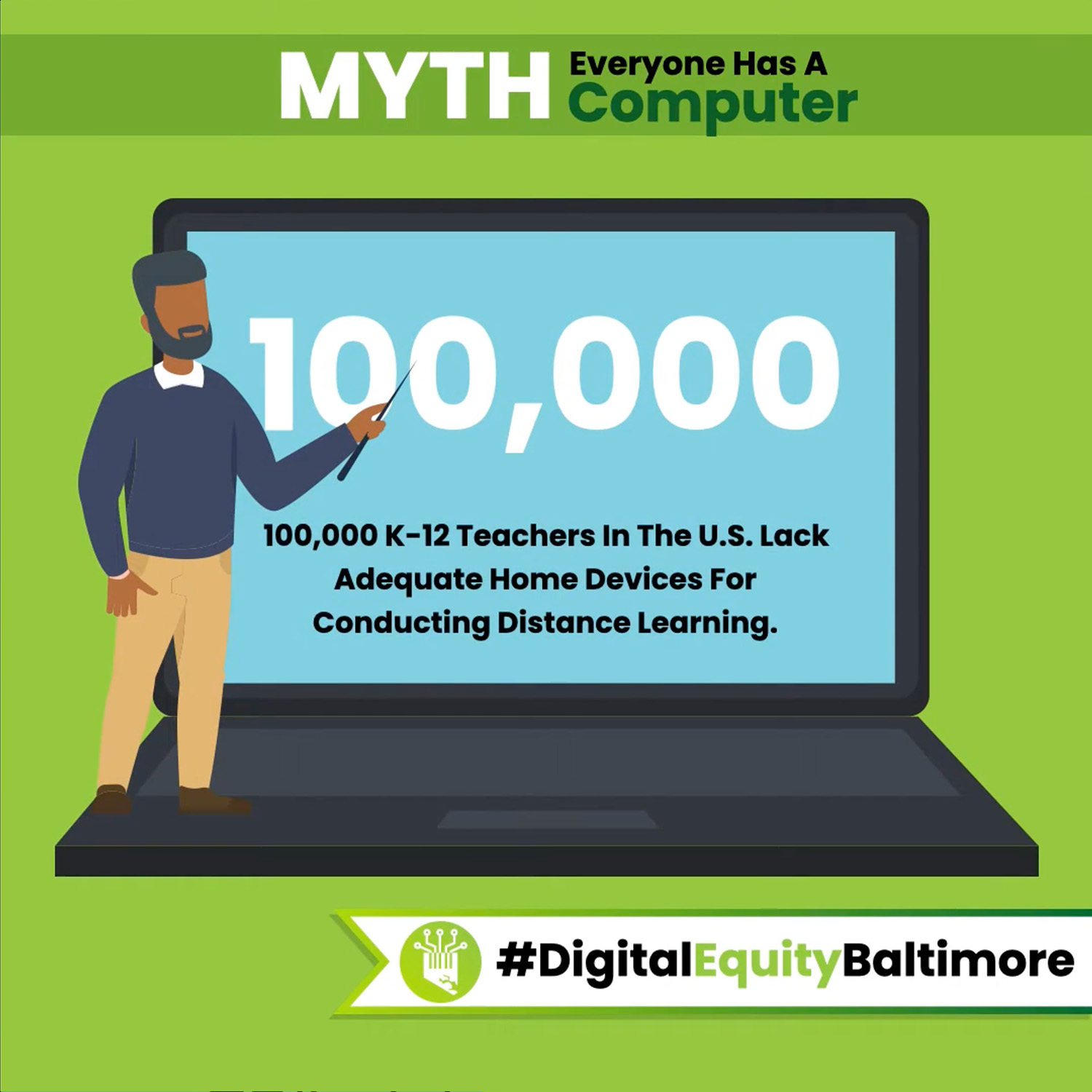
The digital equity awareness campaign used individual statistics as entry points into larger issues. Rather than presenting dense blocks of data, each piece focused attention on a single finding related to internet access, household income, devices, digital skills, or other barriers.
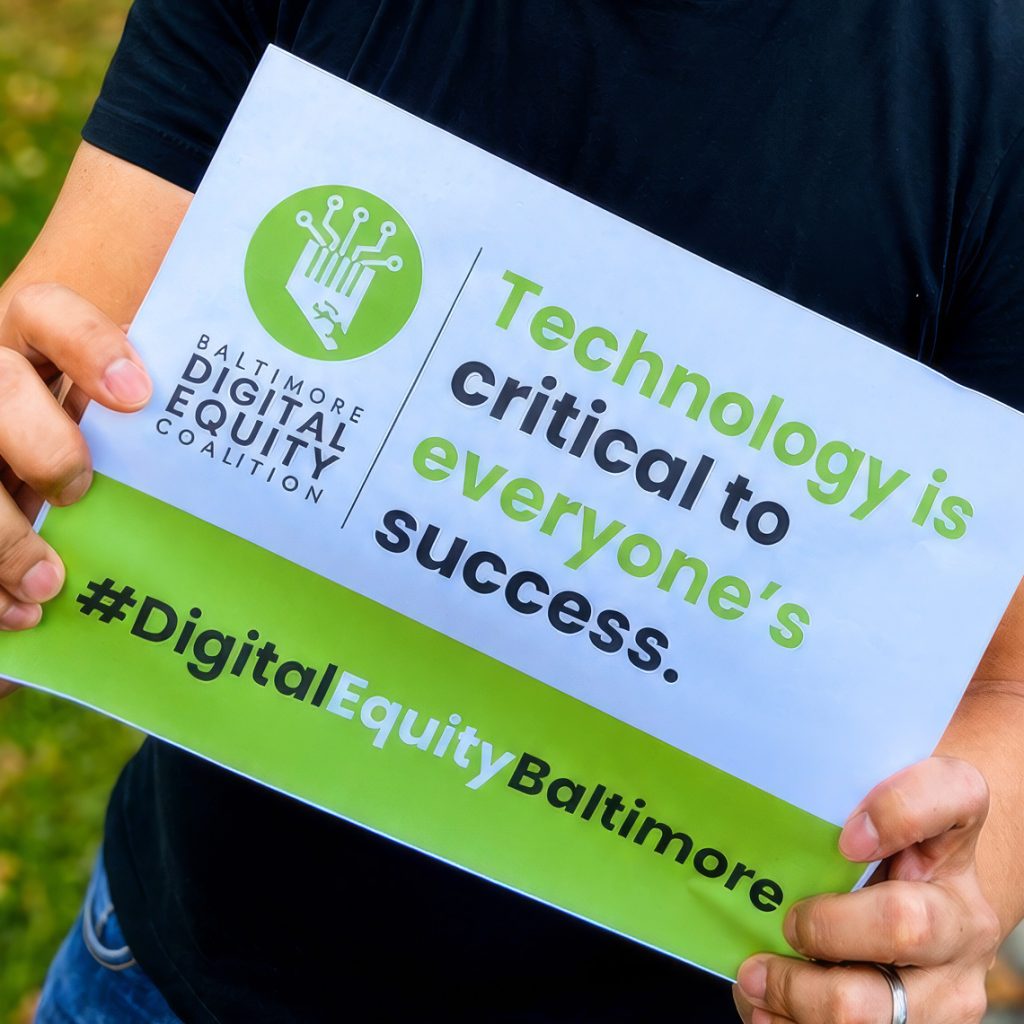
Campaign materials included downloadable advocacy signs, shareable graphics, animated social media content, and short videos. The #DigitalEquityBaltimore hashtag provided a common campaign identifier that coalition members and partners could use when distributing the materials through their own networks.
The creative direction emphasized bold statistics, simplified illustration, high-contrast color, and concise supporting messages. Large numerical callouts allowed important findings to be understood quickly, particularly in social feeds where audiences might encounter the content for only a few seconds.
Illustrated people and community-oriented imagery helped prevent the campaign from feeling like a collection of charts or policy graphics. The visuals reinforced that digital inequity affects individuals, families, businesses, and organizations rather than existing only as an abstract technology issue.
Motion and video extended the same visual language through animated statistics, transitions, supporting illustrations, and short-form storytelling. This created a flexible system that could move between static advocacy graphics and social video while maintaining a consistent campaign identity.
The campaign created a coordinated set of communications resources that coalition members and community partners could use to raise awareness of Baltimore’s digital divide during a period when access to technology had become particularly consequential.
By translating research into visual advocacy materials, animated statistics, and short social videos, the work made digital equity issues easier to communicate across different audiences and channels. The campaign also gave the coalition a recognizable communications framework through #DigitalEquityBaltimore, connecting individual messages to a broader conversation about equitable access, opportunity, and participation.